
Dorsal Root Ganglion Stimulation
Introduction
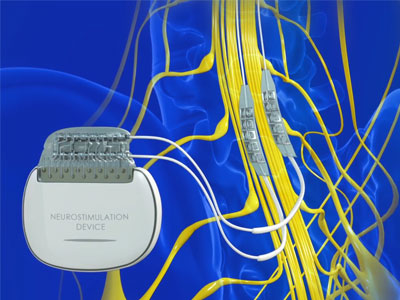
Dorsal Root Ganglion Stimulation or DRG stimulation is a treatment that provides relief from chronic neuropathic pain in conditions such as complex regional pain syndrome (CRPS). It involves stimulation of bundles of nerve cells close to the spine called the dorsal root ganglion, which are responsible for the transmission of pain impulses from specific regions of the body. Stimulation of the dorsal root ganglion blocks the transmission of pain impulses to the brain to provide pain relief.
For more information, please visit: https://www.neuromodulation.abbott
Disease Overview
The dorsal root ganglion is a group of nerve cells present along the dorsal nerve roots which emerge from the spinal cord. Damage or irritation to the dorsal root ganglion can result in a form of neuropathic pain. Chronic pain can adversely affect your activities of daily living, productivity, mood as well as interpersonal relationships.
Indications
Dorsal root ganglion stimulation is indicated for treating chronic neuropathic pain after surgical procedures such as the following:
- Inguinal hernia repair
- Total knee and hip replacements
- Foot and ankle surgery
- Lower extremity amputations
- Complex Regional Pain Syndrome of the lower extremities
- Causalgia from a traumatic injury of the hip, knee, ankle or foot
Preparation for Dorsal Root Ganglion Nerve Stimulation
To prepare for dorsal root ganglion nerve stimulation trial:
- Your doctor will have you undergo a neuropsychological examination (insurance requirement).
- Additional imaging studies will be obtained to evaluate your spine anatomy.
- Quit smoking
- Inform your doctor if you:
- Are or might be pregnant
- Have had any previous health conditions
- Are taking any blood-thinning medications such as Warfarin, Xarelto, Eliquis, Plavix etc.
- Are allergic to any medications or anesthesia
- Additional clearance from your other physicians (primary care physician and specialists etc.) depending on your medical co-morbidities
- Do not stop taking your regular medications until instructed by your doctor
- Arrange for someone to drive you home
Procedure for Dorsal Root Ganglion Nerve Stimulation
The procedure for dorsal root ganglion nerve stimulation is performed in 2 steps that include a trial procedure and implant procedure:
Step 1:
- This is a trial procedure that begins with the insertion of electrodes.
- You will be instructed to lie on the observation table and anesthesia will be injected to make the site of insertion numb.
- Using a fluoroscope/x-ray, a needle will be guided into the epidural space.
- Through the needle, the electrodes are inserted and placed along the targeted nerve(s).
- The electrode wires are connected to an external stimulator which you can control to produce the impulses.
- A test may be conducted to ensure adequate coverage of the painful areas has been obtained.
- Following insertion of the electrodes, you will be kept under observation in the recovery room and can return home the same day.
- The representative from the company will contact you daily to monitor your progress and make adjustments to get you the best pain relief possible.
- Monitor for improvement in quality of life which includes pain, sleep, mood, function and reduction in your use of pain medication.
- Refrain from bending, lifting greater than 10 lbs and twisting to prevent lead migration which could impact your trial results.
- Take oral antibiotics to prevent infection of the lead site. Refrain from showering or getting the electrodes wet.
- The trial lasts for about a week and if you have significant relief (greater than 50% overall improvement in quality of life) and are happy with the results, the second step is performed. The trial also helps your doctor determine the right amount of stimulation for ideal pain relief.
Step 2:
- You will be referred to a surgeon for permanent implantation.
- During this procedure, you will be placed under general anesthesia at an Ambulatory Surgery Center or Hospital.
- The electrodes will be placed in the same location as the trial with a permanent battery underneath your skin. You can discuss the location of the battery with the surgeon prior to the procedure.
Post Operative Care for Dorsal Root Ganglion Nerve Stimulation
After a period of recovery, you will usually be able to return home the same day. The stimulation device is programmed for ideal pain control. Your surgeon will prescribe medication for pain at the incision site. Recovery from this procedure is approximately 7-14 days and mainly consists of incisional discomfort. You will follow up with the surgeon following the implant as directed and with your pain physician 4 to 6 weeks after implant.
Long Term Care for Dorsal Root Ganglion Nerve Stimulation
Follow up with the pain physician 2-3 times a year to ensure the device is working properly. You may still require non opioid medication to assist in management of your symptoms. Periodically, the device may need to be reprogrammed, with assistance of the device company’s representatives, to get better coverage of your pain. The battery will need to be changed every 6-10 years based on your usage.
Advantages
The dorsal root ganglion can easily be accessed and targeted to treat pain from specific areas of the body. The intensity of stimulation is usually low and targets only a part of the neural network.
Risks and complications
The dorsal root ganglion stimulation device is surgically implanted which carries risks such as bleeding, infection and nerve injury.
Summary
Dorsal root ganglion stimulation offers hope to those suffering from chronic neuropathic pain which can be difficult and complicated to manage. The procedure is relatively safe with minimal side effects and is found to be very effective for pain control.