
Radiofrequency Ablation for Lumbar Spondylosis
What is Lumbar Spondylosis Radiofrequency Ablation?
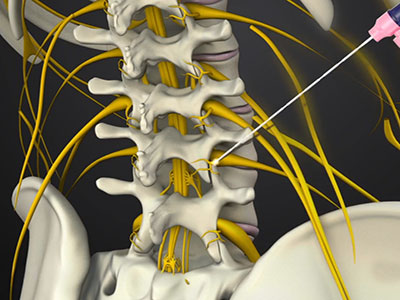
Radiofrequency ablation for lumbar spondylosis is a minimally invasive surgical procedure performed to treat lower back pain secondary to lumbar spondylosis. The procedure employs radiofrequency waves to produce heat which damages the nerves transmitting pain signals to the brain in the lumbar spine.
Lumbar spondylosis refers to degeneration of the cartilage and bones in the lumbar spine (lower back region) due to age-related wear and tear changes resulting in significant back pain or radiating pain into the hips, buttocks or legs and stiffness that worsens over time. This condition is commonly called spinal arthritis or degenerative arthritis (osteoarthritis) of the lumbar spine.
Anatomy
The lumbar spine in the lower back is composed of 5 vertebrae numbered L1–L5. Each vertebra has 2 sets of bony knobs that connect to the adjacent vertebrae. The place where they connect is known as the facet joint. A layer of smooth cartilage covers each joint. Over time, the smooth cartilage can wear thin or get damaged resulting in enlargement of the joints and development of bone spurs near or on the joint. Bone spurs can compress the spinal nerves that branch out from the spinal cord and pass through the facet joints. The nerves that serve the facet joints are known as medial branches. They transmit pain signals to the spinal cord and onto the brain.
Indications for Lumbar Spondylosis Radiofrequency Ablation
Lumbar spondylosis causes abnormal development of bone spurs, herniated discs, and other signs of osteoarthritis. These abnormalities may pinch spinal nerves in the spinal canal creating significant pain and other associated symptoms in the lumbar spine. If conservative treatment such as medications, steroid injections, and physical therapy fail to provide a satisfactory resolution to your symptoms, your doctor may recommend radiofrequency ablation for lumbar spondylosis.
Preparation for Lumbar Spondylosis Radiofrequency Ablation
Preoperative preparation for lumbar spondylosis radiofrequency ablation will involve the following steps:
- A thorough examination by your doctor is performed to check for any medical issues that need to be addressed prior to surgery.
- Depending on your medical history, social history, and age, you may need to undergo tests such as blood work and imaging to help detect any abnormalities that could threaten the safety of the procedure.
- You will be asked if you have allergies to medications, anesthesia, or latex.
- You should inform your doctor of any medications, vitamins, or supplements that you are taking.
- You should refrain from medications or supplements such as blood thinners, aspirin, or anti-inflammatory medicines several days prior to surgery.
- A written consent will be obtained from you after the procedure has been explained in detail.
Procedure Involved in Lumbar Spondylosis Radiofrequency Ablation
Radiofrequency ablation is a minimally invasive technique and therefore administration of general anesthetic is not required. You will be conscious throughout the procedure and lying on your stomach. Only a small area over your lower back which requires treatment is cleansed and numbed. This procedure is performed under the guidance of fluoroscopy. The fluoroscope is a special kind of X-ray machine that helps doctors to visualize the placement of the needle electrode in invasive procedures.
During the procedure, your doctor will direct a special radiofrequency needle electrode into the spinal area or close to the facet joint in such a manner that the needle tip lies almost next to the medial branch nerve. The needle tip is then heated to cauterize and destroy the portion of the nerve that transmits pain signals, thereby reducing the pain. The heat from the needle also destroys bone spurs or other sections of discs that are placing too much pressure on the nerve roots or spinal cord. This procedure typically takes 30-45 minutes depending on how many levels and sides are targeted during the procedure.
Postoperative Care and Recovery
In general, lumbar spondylosis radiofrequency ablation will involve the following postoperative care instructions:
- You will be transferred to the recovery area where your nurse will monitor your vital signs and any allergic reaction. You will be discharged once you are stable.
- You may experience some pain, swelling, and discomfort in the injected area. Pain and anti-inflammatory medications and cold packs are recommended as needed. You may experience pain for up to 14 days.
- You may return to work same day or next day.
- Refrain from smoking for a specific period of time as this may hamper proper healing.
- Refrain from strenuous activities and lifting heavy weights for the first couple of weeks. Gradual increase in activities over a period of time is recommended.
- A periodic follow-up appointment will be scheduled to monitor your progress.
Risks and Complications
Lumbar spondylosis radiofrequency ablation is a relatively safe procedure; however, as with any surgery, possible risks and complications may occur, including:
- Infection
- Excessive bleeding
- Temporary nerve pain
- Neuroma
- Neuritis
- Localized numbness
- Allergic reactions
- Lack of pain relief post procedure